 VapeWholesaleHub
Matcha Ice Warehouse Picking and Batch Rotation — Entry-Level Price Points
A matcha ice programme fails in predictable ways: a specification nobody wrote down, a sample nobody retained, and a lead time nobody stress tested. Here is how to close those three gaps before they cost you a container.
Where Demand Is Heading
Expect matcha ice packaging requirements to keep tightening. Designs that leave room for additional labelling age better than tight layouts that need a full reprint to comply.
Merchandising and Listing Tips
On shelf, matcha ice sells on clarity. A plain shelf talker that states strength and flavour in two words outperforms a beautifully designed but vague display, because most purchase decisions here take under ten seconds.
Modelling a Healthy Margin
Tiered pricing works best when the tiers match real customer behaviour. Most matcha ice buyers will take the second tier if the step is modest and the third tier only if they can see a genuine reason to hold more stock.
Tiered pricing works best when the tiers match real customer behaviour. Most matcha ice buyers will take the second tier if the step is modest and the third tier only if they can see a genuine reason to hold more stock.
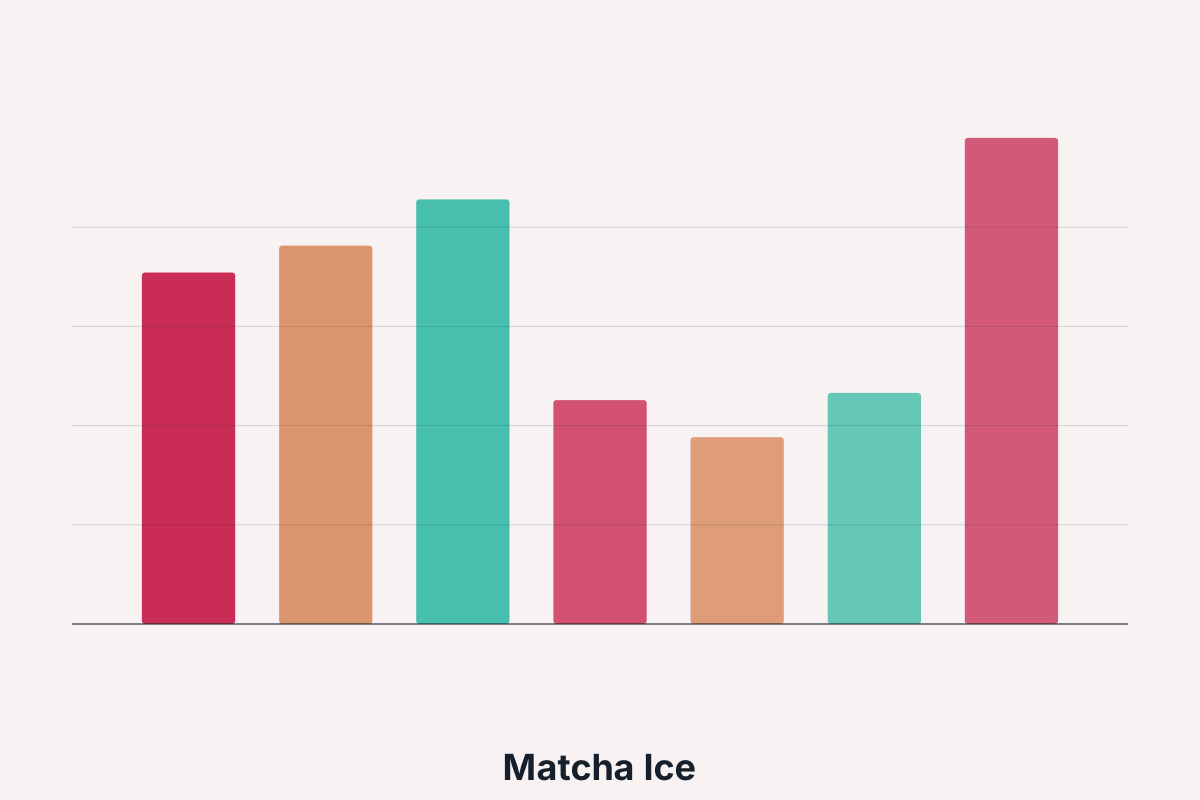
Indicative reference points for planning purposes: entry tier from USD 1.73 per unit at 500 units, mid tier at USD 1.60, and volume tier at USD 0.67 for full container quantities. These figures move with specification, packaging and freight, so treat them as a shape rather than a quote.
How Matcha Ice Batches Are Checked
The defect rate that matters is the one your customer experiences, not the one the factory reports. Bridge that gap by inspecting the way a customer would open the box, not the way a line worker packs it.
Random checks are fine, but weight the sample towards the start and end of a matcha ice production run. Those are where a line is most likely to drift.
- Write the complaint threshold into the order terms.
- Start with a mixed carton and let your own sell-through decide.
- Ask how the factory measures puff count, then compare like with like.
- Rotate stock by batch code rather than by delivery date.
- Confirm the current customs classification with your own broker.
Logistics That Protect Margin
Track matcha ice landed cost per unit as a running number, including duty and local delivery. It is the only figure that tells you whether a supplier change actually improved anything.
Plan the matcha ice customs paperwork at the same time as the order, not when the goods are on the water. A missing document costs more in demurrage than the entire freight saving from a cheap forwarder.
Reading a Matcha Ice Spec Sheet
Where possible, tie part of the matcha ice payment to inspection against the written spec. It focuses attention on the numbers rather than on the relationship.
| Product category | Open system |
|---|---|
| Resistance band | 1.0 - 1.2 ohm |
| Capacity tolerance | +/- 3% |
| Puff count method | Machine cycle 2s on / 18s off |
| Master carton | 100 units |
| Carton weight | 11.5 kg |
| Shelf life | 12 months |
| Storage | 15-25 C, dry, away from direct light |
Practical Checklist
- Rotate stock by batch code rather than by delivery date.
- Model landed cost, not ex-works price, when comparing quotes.
- Keep sealed retained samples from every production batch.
- Agree the tolerance band in writing before approving artwork.
- Check carton dimensions against your freight quote before confirming.
- Ask how the factory measures puff count, then compare like with like.
Frequently Asked Questions
What happens if my market changes its rules?
Regulations move, and packaging or documentation sometimes has to follow. We keep approved artwork files on hand so that a required change is a reprint rather than a redesign, which keeps the cost and delay down.
What is the usual minimum order for matcha ice?
For a standard production run the minimum is normally one master carton per flavour, though mixed cartons can be arranged for a first order. If you are testing the line, ask about a sample pack first and treat the freight as part of your research budget.
Can you match an existing product I already sell?
Often yes, provided we can measure it properly. Send a physical sample and we will report back on what can be matched, what will differ slightly, and why. An honest gap is more useful than a vague promise.
What information do you need to quote?
Target specification, approximate quantity, destination and any packaging requirement. With those four we can usually come back with a costed option the same working day rather than a request for more information.
Is there support for in-store material?
Yes. Shelf talkers, counter cards and simple planogram suggestions are available for matcha ice ranges that reach a sensible volume. Most retailers find the plain strength and flavour cards do the most work.
Next Step
Questions that are not answered here are usually the interesting ones. Reach out with the specifics of your market and we will answer with numbers rather than adjectives.
Related Reading
- Matcha Ice Approval Workflow From Sample to Shipment — Regional Distributors
- Matcha Ice Lead Time Buffers That Actually Work — Cash-and-Carry Formats
- Matcha Ice OEM and ODM: Which Model Fits Your Business — Online Sellers
- Matcha Ice Factory Visit Preparation Checklist — Oceania
- Where Matcha Ice Fits in a Balanced Vape Assortment — Three Price Tiers
- Matcha Ice Compliance Basics for Importers — Multi-Warehouse Networks