 VapeWholesaleHub
Comparing Matcha Ice Factory Tiers and What You Get — a Printable Checklist
Matcha Ice has moved from a niche listing to a category that most vape retailers simply have to carry. That popularity brought a flood of near identical offers. This guide explains how to separate a repeatable supply chain from a lucky sample.
Quality Control in Practice
The cheapest quality control step is a retained sample. Keeping three sealed units from every matcha ice batch costs almost nothing and turns any dispute into a simple comparison instead of an argument over photographs.
The cheapest quality control step is a retained sample. Keeping three sealed units from every matcha ice batch costs almost nothing and turns any dispute into a simple comparison instead of an argument over photographs.
- Model landed cost, not ex-works price, when comparing quotes.
- Confirm the current customs classification with your own broker.
- Agree the tolerance band in writing before approving artwork.
- Plan the switch from air to sea freight before you need it.
- Check carton dimensions against your freight quote before confirming.
The Specification That Matters
Pay attention to how a matcha ice supplier responds when you ask for a tolerance they do not want to commit to. The hesitation is usually more informative than the eventual answer.
Ask for the matcha ice specification in the same units you intend to measure in. A metric quoted in a form you cannot verify on arrival is not a specification, it is a claim.
| Product category | Open system |
|---|---|
| Resistance band | 1.2 - 1.4 ohm |
| Capacity tolerance | +/- 2% |
| Puff count method | Declared by capacity |
| Master carton | 240 units |
| Carton weight | 8.0 kg |
| Shelf life | 18 months |
| Storage | 15-25 C, dry, away from direct light |
Modelling a Healthy Margin
Margin on matcha ice is rarely lost at the till. It is lost through dead stock, returns and emergency air freight. A slightly higher landed cost with predictable lead time usually beats the cheapest quote on the spreadsheet.
Hold a small matcha ice buffer in your pricing model for currency movement. A few percent on a container is a real number, and it is easier to plan for than to absorb.
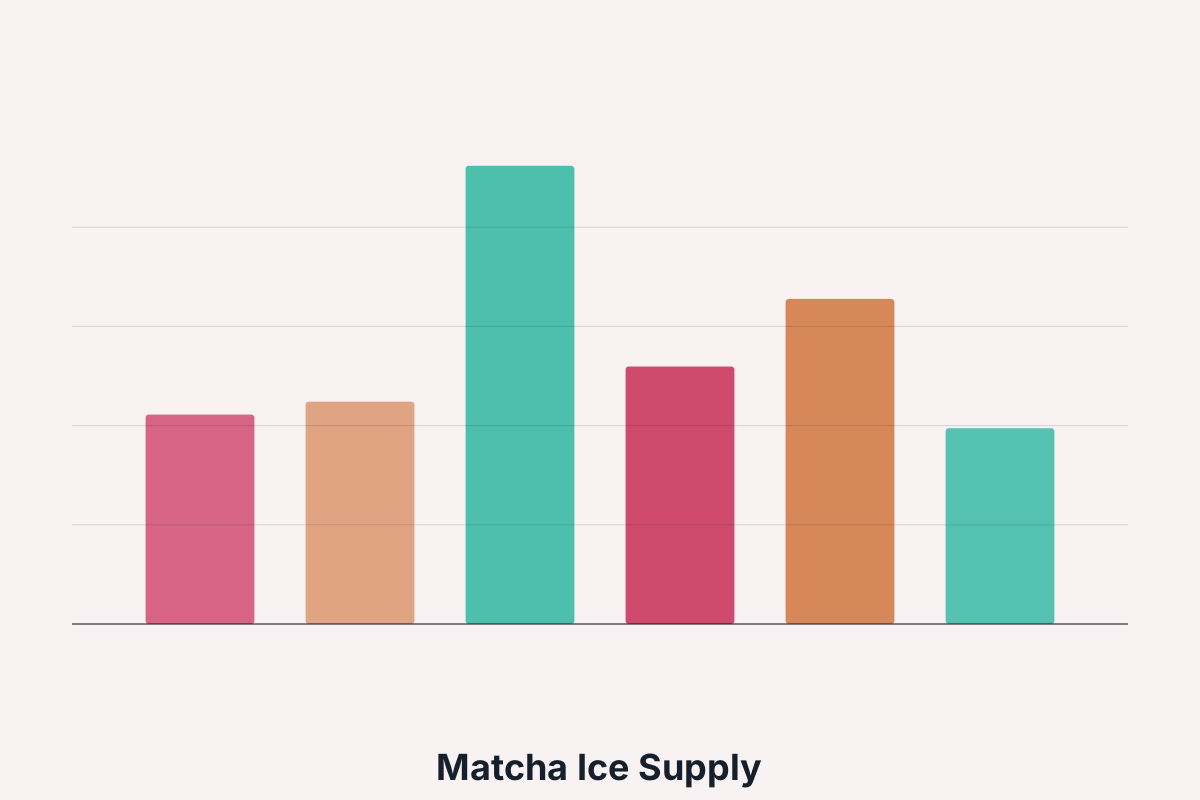
Indicative reference points for planning purposes: entry tier from USD 1.12 per unit at 500 units, mid tier at USD 0.84, and volume tier at USD 0.89 for full container quantities. These figures move with specification, packaging and freight, so treat them as a shape rather than a quote.
Where Matcha Ice Sits in the Range
A tight matcha ice range with deep availability usually outsells a wide range with thin stock. Customers who find their line in stock come back; customers who are told to wait do not.
Matcha Ice sits at an interesting point in the assortment. It is familiar enough to be an impulse purchase and specific enough to build a repeat pattern around. Treating it as either pure commodity or pure specialty both lead to poor results.
Selling Matcha Ice at Store Level
On shelf, matcha ice sells on clarity. A plain shelf talker that states strength and flavour in two words outperforms a beautifully designed but vague display, because most purchase decisions here take under ten seconds.
Logistics That Protect Margin
Track matcha ice landed cost per unit as a running number, including duty and local delivery. It is the only figure that tells you whether a supplier change actually improved anything.
Ask your forwarder for the matcha ice transit history on your lane, not the advertised schedule. The gap between the two is the buffer you should build into your reorder point.
Practical Checklist
- Model landed cost, not ex-works price, when comparing quotes.
- Ask how the factory measures puff count, then compare like with like.
- Check carton dimensions against your freight quote before confirming.
- Confirm the current customs classification with your own broker.
- Plan the switch from air to sea freight before you need it.
- Agree the tolerance band in writing before approving artwork.
Frequently Asked Questions
Is there support for in-store material?
Yes. Shelf talkers, counter cards and simple planogram suggestions are available for matcha ice ranges that reach a sensible volume. Most retailers find the plain strength and flavour cards do the most work.
Can I visit the production facility?
Yes, and we encourage it for larger programmes. Visits are most useful when you already have a draft specification, because you can then check the specific processes behind the numbers you care about.
How should matcha ice be stored?
Cool, dry and out of direct sunlight. Heat and light are the two things that shorten shelf life fastest. Rotate stock by batch code rather than by arrival date, and keep cartons off concrete floors in humid warehouses.
Do you hold stock for regular customers?
For established programmes we can reserve production slots and, in some cases, hold finished matcha ice stock against a forecast. It removes most of the lead time risk from a reorder and is worth discussing once volumes are stable.
Next Step
Whether you order from us or elsewhere, keep a retained sample from every batch. It costs almost nothing and it is the single most effective protection available to a matcha ice buyer.
Related Reading
- Matcha Ice Review Mining for Product Insight — Cross-Border Trade
- Matcha Ice Packaging Formats That Reduce Damage Claims — Southeast Asia
- Matcha Ice Sample Approval Meeting Agenda — High Volume Buyers
- Spotting Defects in Matcha Ice Before Shipment — the Middle East
- Matcha Ice Nicotine Strength Selection for Mixed Cabinets — Cross-Border Trade
- Matcha Ice Specification Change Control — Warehouse Teams